 ISO 9001 / IATF 16949 Certified
0.01 kg to 1000 kg
Documented Casting Weight Range
±0.1 mm
Investment Casting Reference
ISO 2768
General Tolerance Reference
40–500 ton
Documented Die-Casting Machine Range
Low to high volume
Production Coverage

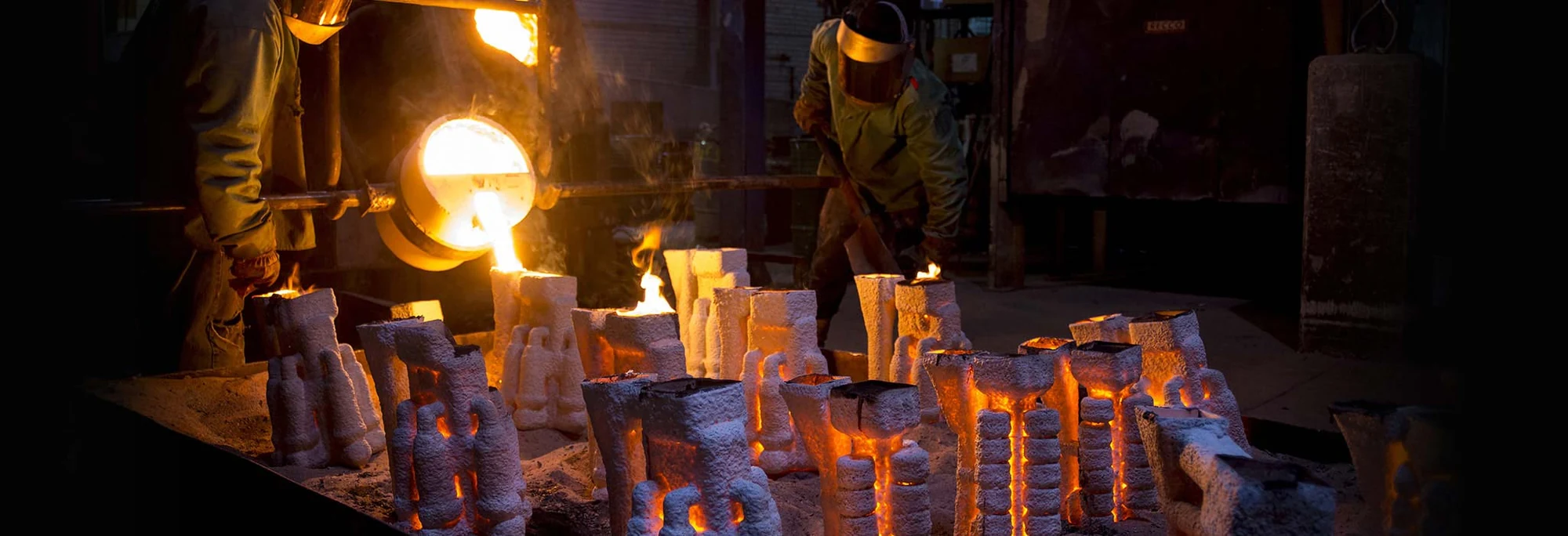
Die casting, investment casting, and sand casting solutions
We offer comprehensive casting and related manufacturing routes including investment / lost-wax casting, sand casting, die casting, lost-foam casting and metal injection moulding for motor components and industrial parts.
The supplied capability documentation also covers copper and aluminium rotors, aluminium extrusions, heat sinks, housings and cast-and-machined parts with secondary machining, heat treatment, surface finishing and inspection.
| Material | Specification |
|---|---|
| Ferrous Alloys | Carbon steel, stainless steel, grey iron and ductile iron |
| Aluminium | Aluminium alloys including documented ADC12 and A380 rotor applications |
| Copper & Brass | Copper, brass and related copper-alloy casting requirements |
| Zinc & Magnesium | Non-ferrous die-casting alloy families where suitable for the application |
| Titanium & Other Alloys | Specialist alloy requirements subject to process and drawing review |
Alternator and starter housings, engine components, aluminium and copper rotor applications
Motor housings, pump housings, impellers, generator housings and gearbox housings
Valves, hydraulic manifolds, machinery parts, robotic components and pneumatic-tool components
Heat sinks, enclosures and aluminium extrusion profiles for thermal-management applications
Hospital-bed brackets and other custom cast-and-machined components described in the supplied documentation
Technical manufacturing reference
The casting capability document covers investment, lost-wax, sand, die and lost-foam casting, metal injection moulding, copper and aluminium rotors, aluminium extrusion, heat sinks and cast-and-machined components. Projects can combine tooling, casting, secondary machining, heat treatment, surface finishing and inspection.
| Parameter | Documented capability |
|---|---|
| Casting routes | Investment / silica-sol, lost wax, sand, die, lost-foam and metal injection moulding |
| Production | Low to high volume |
| Weight range | Approximately 0.10 g to 1000 kg in the supplied capability table |
| General tolerance reference | ISO 2768, with process-specific tolerances agreed to drawing |
| Standards | ASTM, SAE, AISI, ACI, DIN, EN, ISO and JIS references |
| Materials | Carbon steel, grey/ductile iron, aluminium, brass, copper, zinc, stainless steel, titanium and other alloys |
| Secondary processes | CNC machining, grinding, milling, boring, drilling, cutting, surface treatment, heat treatment and inspection |
Technical information is presented from Motor Components Ltd capability documentation and should be matched to the drawing, material, duty and production requirement for each enquiry.
Detailed technical information
Technical wording, tables and graphics below are reproduced from the supplied Motor Components capability material and are displayed directly on this product page.
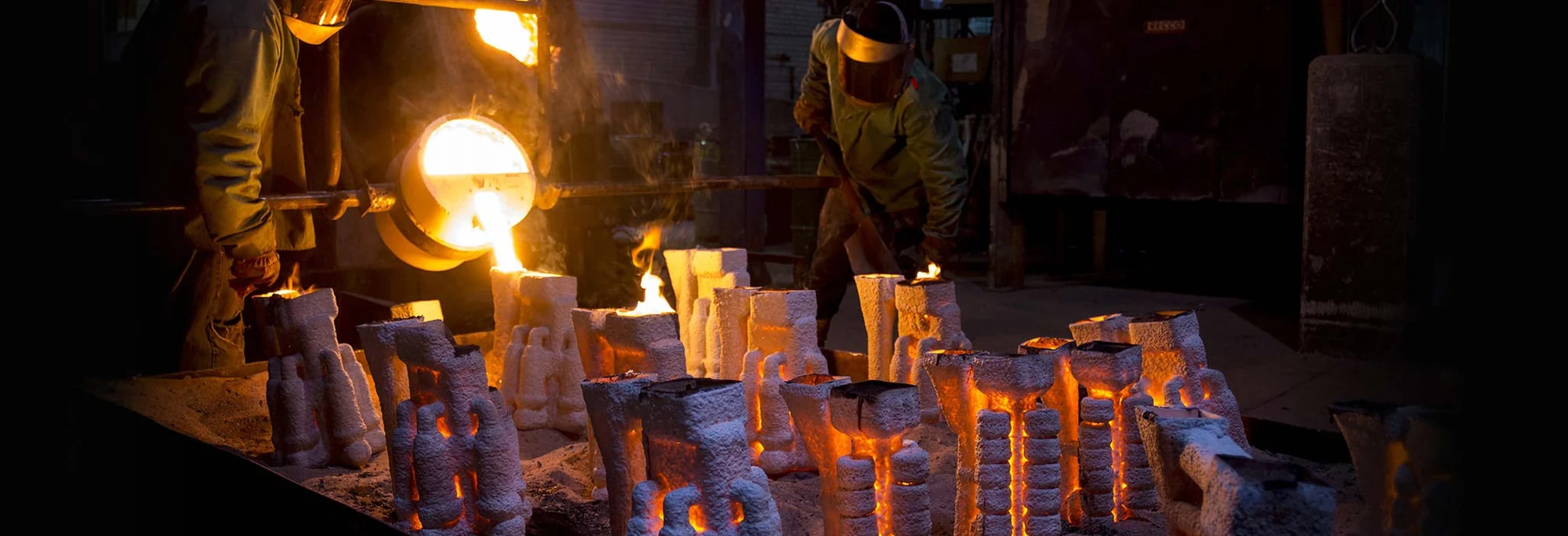
Casting is a type of manufacturing process that involves pouring a liquid material into a mold that has a hollow cavity of the desired shape, and then allowing it to solidify. Once the material solidifies, it forms a part, known as a casting, which is then removed from the mold to complete the process. Typically, casting materials consist of metals or materials that cure after mixing two or more substances with a specific time-setting property.
Investment casting a process of forming metal that typically uses a wax pattern surrounded by a ceramic shell to make a ceramic mold. When the shell dries, the wax is melted away, leaving only the mold. Then the casting component is formed by pouring molten metal into the ceramic mold.
Investment casting materials include steel alloys, aluminum alloys, nickel-based alloys, titanium alloys, cobalt-based alloys, brass, bronze, copper, and precious metals. The choice of material depends on the requirements of the application and the desired properties of the final product.
This is a process that made in the sand mould. Steel, iron and a lot of nonferrous alloys can be made with this process. Since the sand mould is cheap, easy to get and to make, sand casting is used for a wide variety of products for many different industries, and the parts’ weight can be from min 0.1KG to max 100T. Because of this big range, we have four sand casting processes to choose: green sand, resin sand, water glass sand, and shell molding. Each of them will be suitable for different shapes, materials, and tolerances. Those casting products are widely used in automotive industry, pumps and valves, engineering machinery industry, and machinery parts. Materials can be carbon steel, stainless steel, ductile iron, gray iron and copper, etc.
Die casting is a highly efficient metal casting process that involves injecting molten metal under high pressure into a mold cavity. The mold cavity is formed by two sturdy tool steel dies, which are machined into shape and operate much like an injection mold during the process. Die casting is mostly used to produce non-ferrous metals like copper, zinc, aluminum, magnesium, lead, and tin-based alloys. Depending on the type of metal being cast, either a hot- or cold-chamber machine is utilized. This technique is superior to other manufacturing methods, and it's highly effective in producing complex shapes with high precision.
When it comes to die casting materials, there's a wide range of options available, including aluminum alloys, zinc alloys, magnesium alloys, copper alloys, brass, lead, and tin-based alloys. The choice of material will depend on the specific requirements of the application and the desired properties of the final product. Die casting offers exceptional flexibility, speed, and accuracy, making it the ideal choice for many industrial applications.
Die casting materials include a range of non-ferrous metals, such as aluminum alloys, zinc alloys, magnesium alloys, copper alloys, brass, lead, and tin-based alloys. The selection of material depends on the specific application and desired properties of the final product.
Copper die-cast rotors are a popular choice for improving the overall efficiency of electric machines. This is due to the fact that the electrical conductivity of copper is approximately 40% higher than that of aluminum, which is commonly used for cast rotors. By using copper instead, the total loss of the motor is significantly reduced, leading to an increase in efficiency.
The process of copper high-pressure die casting requires a high level of purity in the melted mass and a casting temperature of around 1,150°C. These prerequisites are in place, making it possible to achieve cost-effective series production. In order to further enhance the efficiency of energy-saving motors, the cage cast in the rotor can be made using copper instead of aluminum high-pressure die casting.
When it comes to selecting between copper and aluminum die-cast rotors, the decision largely depends on the specific requirements of the application. Copper die-cast rotors are ideal for applications that require high electrical and thermal conductivity, while aluminum die-cast rotors are lighter, less expensive, and better suited for high-speed rotation or weight-reducing applications.
Copper bar rotor motors are an excellent choice for improving efficiency without the need for a variable frequency drive (VFD). They offer higher overall system efficiency and can replace current applications of induction motors to achieve efficient operation. We provide solutions for voltage ratings ranging from 380V to 13.8kV, with power ranges of 0.5kW to 3000kW/1500-8000 RPM.
The exact composition of the copper alloy used for die-casting rotors may vary depending on the requirements of the application and the desired properties of the final product. Copper die-cast rotors are typically made using a high-conductivity copper alloy that contains various elements such as nickel, iron, and chromium. These elements are added to improve the mechanical properties of the copper, such as strength, ductility, and corrosion resistance. With their excellent thermal and electrical conductivity, high strength, and durability, copper die-cast rotors are an excellent choice for use in electric motors and generators.
If you're interested in developing your copper rotor application, we can assist you in every step of the process from concept to production. Our services include designing your tooling and producing your castings using our machines throughout the design phase and production.
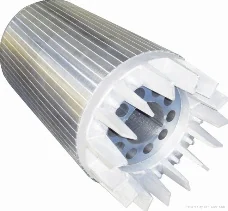
Aluminum die-cast rotors are typically manufactured using aluminum alloys formulated for high-strength and high-temperature performance. Common alloys include ADC12 and A380, known for their excellent castability and mechanical properties. These rotors are widely employed in electric motors, generators, compressors, and pumps due to their high thermal conductivity, which facilitates efficient heat dissipation, and their lightweight design, which reduces system weight and enhances efficiency.
The high degree of customization achievable with aluminum die-cast rotors allows for complex shapes and intricate designs, making them ideal for applications requiring high precision and tight tolerances. Aluminum die-cast rotors offer a combination of strength, efficiency, and versatility that makes them a preferred choice for diverse industrial applications.
While both copper and aluminum die-cast rotors are prevalent, they differ significantly in electrical conductivity, thermal conductivity, and strength-to-weight ratio. Copper rotors are better suited for applications demanding high electrical and thermal conductivity, whereas aluminum rotors excel in applications prioritizing lightweight design, high-speed rotation, or weight reduction. The optimal choice depends on the specific application requirements and desired end-product properties.
Extruded aluminium is a type of metal that is produced by forcing it through a die under high pressure. This process results in a variety of shapes and sizes of aluminum profiles that can be used in various applications, such as construction, automotive, and aerospace industries. The extrusion process allows for the creation of complex shapes with tight tolerances, making it a popular choice for many manufacturing applications. Additionally, extruded aluminum is known for its strength, durability, and corrosion resistance, making it a highly desirable material for a wide range of projects.
Extruded aluminum is used in electric motor manufacturing industry for motor housings, motor body, heat sinks, and brackets. Its strength, durability, and heat-conducting properties make it an ideal choice for many motor applications.
A die cast heat sink is a type of thermal management solution that is made using a die casting process, which involves injecting molten metal into a mold to create a specific shape. The heat sink is designed to dissipate heat from electronic components, such as CPUs and LEDs, and prevent them from overheating. Die cast heat sinks are known for their high thermal conductivity, durability, and cost-effectiveness. They are commonly used in applications that require efficient heat dissipation, including automotive, aerospace, and industrial electronics. With their ability to withstand high temperatures and extreme environments, die cast heat sinks are a popular choice for many industries.
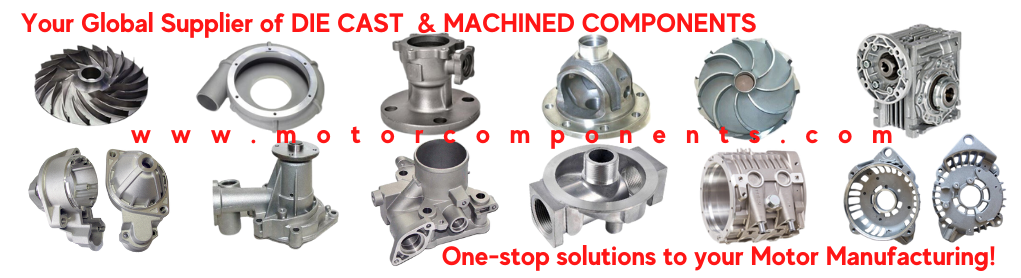
We specialize in supplying high-quality cast and machined parts for a wide range of industries, including automotive, electric motors, aerospace, industrial, and many more. Our parts are made using the latest manufacturing processes and techniques, ensuring precision, durability, and performance. We offer a diverse range of cast and machined parts, including engine components, transmission parts, brake components, and much more. Our parts are designed to meet the specific requirements of each application, and we work closely with our clients to ensure that their needs are met.
Whether you need a single part or a large volume order, we can deliver on time and within budget. With our expertise and experience, you can trust us to provide the best cast and machined parts for your industry and application.
We are problem solvers. Committed to helping our clients build customized, efficient, and cost saving supply chain programs.
From concept throughout the production, all phases of manufacturing are engineered for high precision casting products.
Our global clients include companies in the automotive, machinery, commercial, marine, aerospace, and medical industries. We employ numerous non-destructive and laboratory test methods on site in our quality lab to verify precision of internal structure and material composition. Our highly skilled engineers, chemists, and technicians handle order loads from a few pieces to several million per year.
Send us your enquiry today!
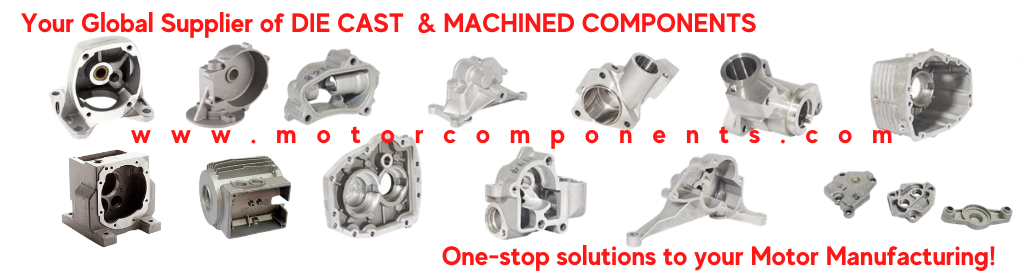
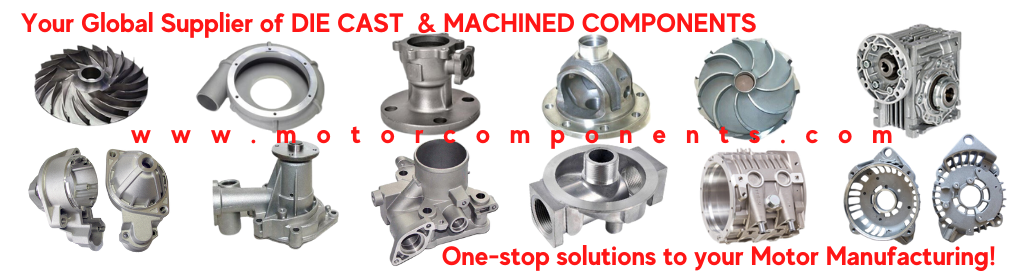
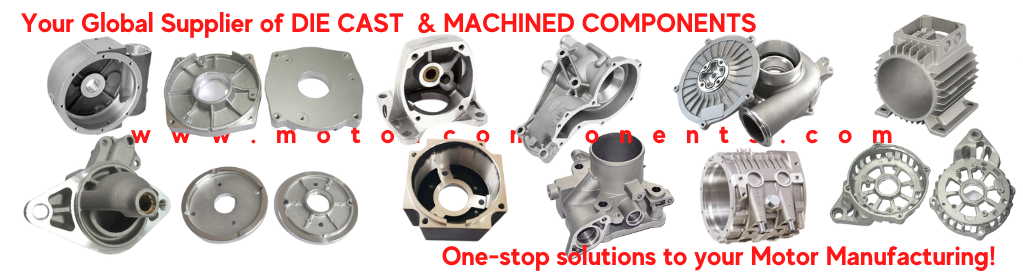
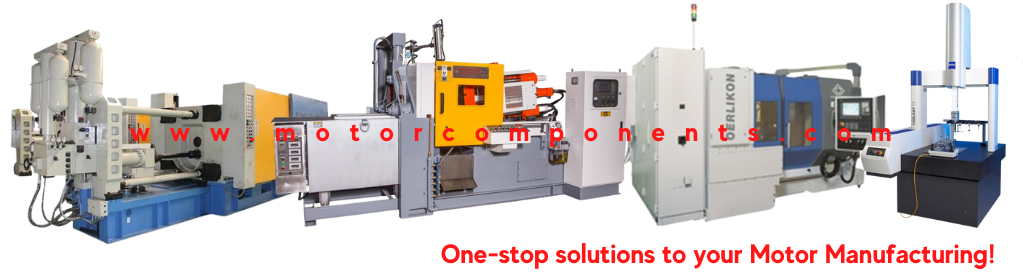
We are capable of meeting material specifications according to ASTM, SAE, AISI, ACI, DIN, EN, ISO, and GB standards. We have more than 100 different ferrous and non-ferrous alloys with which we cast parts using a complex design criteria. Our dimensionally and geometrically complex investment castings are produced to net shape, minimizing the need for secondary machining. Our top-of-the-line equipment and automation process controls allow for consistent and repeatable tolerances as close as ±0.1 mm. Our castings can also be produced in a wide size range. They be as small as 10 mm long x 10 mm wide x 10 mm high and weigh as little as 0.01 kg, or as much as 1000 mm in length and weigh as much as 1000 kg.
We pride ourselves in offering our customers the highest-quality service from start to finish. Our services include:
| Description | CASTING / INVESTMENT CASTING |
| CASTING TYPES | Investment Casting (Silica Sol) Lost Wax Casting Sand Casting Die Casting Lost-foam casting (LFC) (MIM) Metal Injection Molding |
| Weight | 0.10gr ~1000kgs |
| Tolerance | ISO 2768 |
| Certifications | ISO 9001 / IATF/TS16949 |
| Production | Low to high volume production |
| Standards | ASTM, SAE, AISI, ACI, DIN, EN, ISO, JIS |
| Material | Carbon steel grades, gray iron, ductile iron, aluminium, brass, copper, Zinc, carbon steel, stainless steel, titanium other steel alloys etc.. |
| Process | Tooling, casting, Deburring, CNC machining, grinding, milling, boring, drilling, shearing, and cutting, surface treatment, ultrasonic cleaning, inspection etc. |
| Surface treatment | Vibration grinding, shot blasting, Polishing, brushings, plating (zinc, nickel, chrome, silver) powder coating, anodising, electrophoretic coating, Anodization, PVD, as per requirement. |
| Heat Treatments | Induction hardening, normalization, annealing, quenching, tempering, case Hardening, nitriding etc. |
| Application | Automotive, industrial; pumps, motors, valves, home appliances, power tools, pneumatics tool applications: Alternator - Starter housing, gear box housing, pump housing, robotic components, generator housing, hospital bed bracket, hydraulic manifolds, engine components |
Tooling is designed & manufactured by us with our core expertise and Tool Modelling, Tool Path Generation, VMC Machining, EDM Processes and other related activities, which are done in house to cut down & maintain development times at the lowest. We take responsibility of proving the components on the dies made by us.
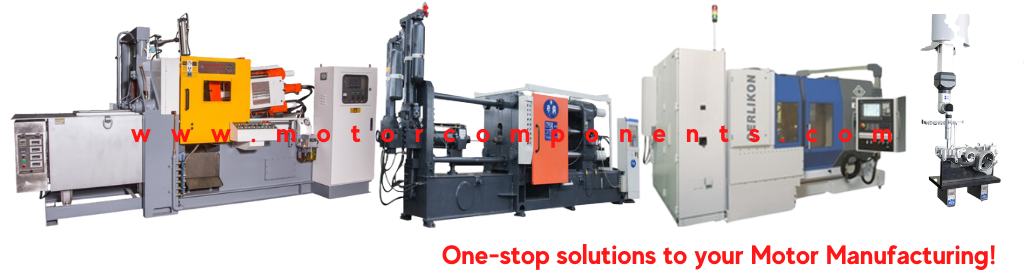
From concept through production, all phases of manufacturing engineered for high precision components. in-house tool design, sample, prototype concept to mass production. We dedicate to provide the high precision, low to high volume for our customers who are struggling with small demand and limit of seeking for right suppliers.
Company has strong economic strength, covers an area of 45000 .It has more than 300 uinits equipments, including punch presses ranging from15 tons to750 tons, single slot high-speed punching machines, multiple high speed punching machines and stator-press fitting, rotor-cast aluminum, wire cutting, lathe, milling machine, facing machines, grinding machines and so on.And 160T, 200T, 300T, 400 T, 550Thigh speed punching machines in total of 15 units, 400 units 15 ~ 400 tons punch press, 50 units single slot high-speed punching machines, 15 units 40 ~ 500 tons die casting machines and 2 units large centrifugal cast aluminum machines , 20 units 40 ~ 315 tons of stator voltage press fitting machines, 10 units automatic blanking lines (including 3 electronic CNC automatic blanking production lines), there are also all kinds of mould manufacturing and maintenance equipments more than 50 units.
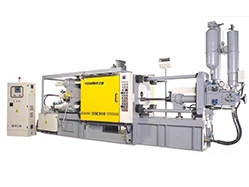 Processing equipments | Casting machines Forging machines Stamping machines Hydraulic presses CNC Machining centre CNC Milling machines Punching machines CNC laser cutting machines CNC Bending machines CNC Welding machines Drilling & boring machines Cutting and Shearing machines Bevelling machine Riveting machines Heat treatment furnace/equipment Nitriding equipment’s Cleaning equipment’s Testing and Inspection equipments etc... |
Inspections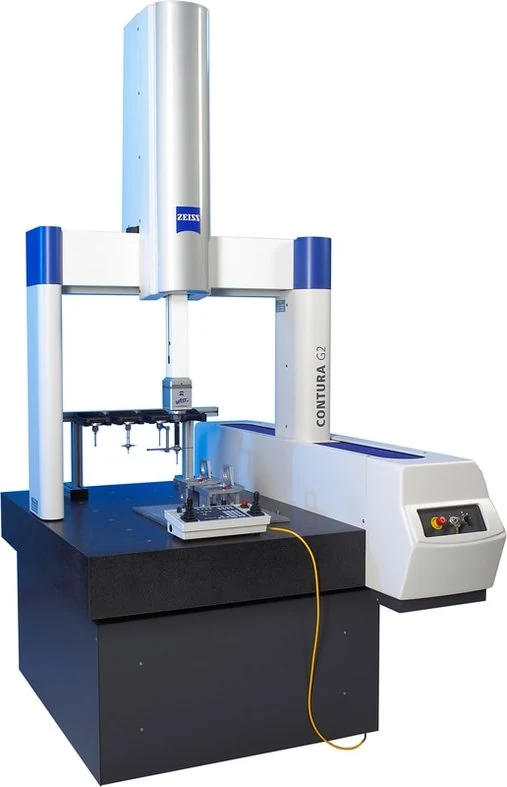 | CMM (Coordinate Measuring Machine) Vision System Digital tool microscope Overhead projectors Optical System Surface roughness measuring instrument Optical Comparator Run-out instrument Gauging instruments; for thread, height, roundness Micrometers Rockwell/Vickers Hardness Tester Bore Scope Bore Gauges Custom Gauging Gage Calibration System |
Our manufacturing facilities are ISO 9001 and IATF/TS16949 certified. Our greatest asset is delivering outstanding product quality and first-class service to our customer globally.
Casting operations management system is ISO 9001:2015 registered.
Our components are efficiently manufactured to give our customers very competitive pricing without compromising the product quality.
We offer warehousing locations across the UK and Europe that are set up for stocking programs and deliveries to match customer specific manufacturing and inventory requirements.
OEM sourcing guidance
Casting is used for housings and structural parts where shape, stiffness and material properties need to be balanced with production economics. The best route depends on alloy, geometry, tolerance, surface finish and expected volume.
Use these services when the requirement needs development, validation or a new sourcing route.
Buyer questions
The site lists die casting, investment casting and sand casting among the available casting routes.
Critical machined features, datums, tolerances and finished dimensions should be clearly identified in the technical information.
Yes. A sample can help support a reverse-engineering discussion where drawings are incomplete.
Our stringent quality management ensures product consistency covering all processes from raw material procurement to finished goods production. The products and processes pass through stringent quality tests benchmarked with global standards.
Send us your technical drawings, specifications, or samples for an obligation-free quotation. Our team responds within 24 hours.